When you buy through links on our articles, Future and its syndication partners may earn a commission.

We've all had the thought — wouldn't it be nice if summer were just a little longer? Well, it might become a reality in the not-too-distant future. And, unfortunately, that's not a good sign for our planet.
According to a new study, climate change — primarily driven by human activities like burning coal for cheap power — could lengthen summers in Europe by 42 days by the year 2100. That's because the "latitudinal temperature gradient" (LTG), or the temperature difference between the North Pole and the equator, is currently decreasing. A higher LTG drives wind patterns across the Atlantic Ocean, bringing about seasonal temperature changes in Europe. With a lower LTG, summer weather patterns and heat waves will last longer across the continent.
"Our findings show this isn't just a modern phenomenon; it's a recurring feature of Earth’s climate system. But what's different now is the speed, cause and intensity of change," Dr. Laura Boyall, an author of the study, said in a statement."
To peer back into Earth's climate history in Europe, researchers analyzed layers of mud at the bottom of lakes. Deposited seasonally, these sediments paint a clear timeline of winters and summers as far back as 10,000 years ago.
Around 6,000 years ago, European summers were about eight months long due to natural fluctuations in the LTG. But now, the Arctic is warming up to four times faster than the global average, in part due to greenhouse gas emissions. For every degree Celsius the LTG decreases, European summers will grow by about six days. Thus, according to current climate projections, Europe will have 42 extra days of summer by 2100.
"Our research has uncovered that European seasons have been driven by the temperature gradient over thousands of years, which provides useful insight that can be used to help predict future changes more accurately," says Dr. Celia Martin-Puertas, lead researcher from Royal Holloway at the University of London. "The findings underscore how deeply connected Europe’s weather is to global climate dynamics and how understanding the past can help us navigate the challenges of a rapidly changing planet."
A study on the research was published on Nov. 19 in the journal Nature Communications.

A powerful geomagnetic storm created a series of brilliant auroras recently for observers across North America.

The images reveal the storm's incredible power and offer vital insights into how such hurricanes form.

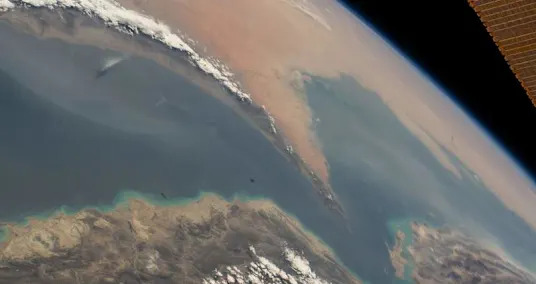
This satellite image reveals not only geological beauty but also the deep ties between landscape, climate and history in one of the world's driest deserts.
LATEST POSTS
- 1
 I'm an 83-year-old yoga instructor. I'm not your typical grandma — I still work to feel fulfilled and supplement my Social Security.
 - 2What loving-kindness meditation is and how to practice it in the new year
- 3Figure out how to Put resources into Lab Precious stones: A Novice's Aide
- 4The Best 15 Applications for Efficiency and Association
- 5The most effective method to Apply Antiquated Ways of thinking in Current Brain science Practices


- Islamabad: Iran allows 20 Pakistani ships through Strait of Hormuz
- They grew up with 'almond moms.' Now, they dread going home for the holidays.
- EU states agree first step for Ukraine reparations fund
- Antimatter took to the road for the very first time. Here’s why it matters
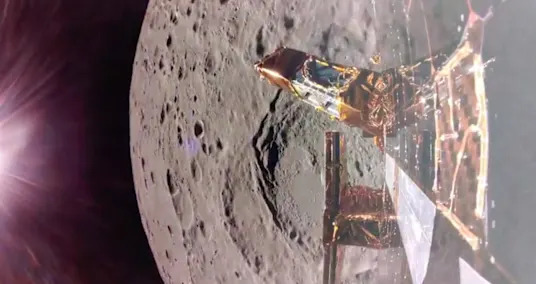
- 1st results from Blue Ghost lunar lander reveal how much we still don't know about the moon
- The most effective method to Integrate Compact disc Rates into Your Retirement Arranging
- Famous Places to get-away for Americans
- Amid growing bipartisan scrutiny of Pete Hegseth, Trump says he 'wouldn't have wanted … a second strike' on alleged Venezuelan drug boat survivors
- Hamas demanded displaced Gazans pay rent on beach tents amid torrential downpour, IDF reveals