NATO members often aren't buying weaponry together, an alliance official said.
She shared that nations still approach industry "individually with their individual requirements."
She also said NATO needs to change its development models.
NATO members aren't regularly buying weapons together, limiting how quickly and cheaply they can build up stockpiles, a senior alliance official said.
Tarja Jaakola, NATO's assistant secretary general for defense industry, innovation, and armaments, said that allies can acquire weaponry most cost-effectively by jointly purchasing it.
Having multiple countries trying to independently develop similar weaponry means fewer resources per program and higher per-unit costs than working together.
But she said that's often not what is happening.
"When I talk with the industry, the industry keeps telling me many nations still approach them individually with their individual requirements. And that is something that we should avoid," she told UK think tank Chatham House.
Instead, "we should look at how much can we collaborate, work together," Jaakola said. She said shared systems also make it easier for allies to operate together in a war.
She said that countries need to "make sure that we use the taxpayer's money cost efficiently," especially given that "the cost escalation within defense systems is higher than in the civilian market."
She said that allies should be embracing collaboration, co-production, and joint procurement: developing, building, and buying weapons together. NATO is made up of 32 countries, some of which are small. Internal competition for resources and contracts isn't desirable.
Russia's invasion of Ukraine has driven worries of wider war across the alliance and a flurry of defense spending. As more money flows into defense, questions are being raised about traditional development and acquisition processes.
The traditional defense development cycles are too slow, and the resulting arsenals are too small. Ukraine is demonstrating that it can build and modify weapons more quickly and cheaply than its partners typically can.
Officials across the alliance have noted the issue and advocated for joint production.
NATO has been increasingly pushing for greater joint production and encouraging allies to take out multinational contracts. The alliance said last year that member states are invited to "make joint procurement the preferred procurement choice." The European Union, where most of NATO's members are based, has also changed rules to incentivize joint procurements.
NATO Secretary General Mark Rutte said that joint procurement should reduce costs for alliance members when buying gear.
Many leaders in Europe feel the same. Ursula von der Leyen, the president of the European Commission, said last year that joint procurement would "reduce costs, reduce fragmentation, increase interoperability, and strengthen our defence industrial base."
"We are living in the most momentous and dangerous of times," she warned. "The real question in front of us is whether Europe is prepared to act as decisively as the situation dictates. And whether Europe is ready and able to act with the speed and the ambition that is needed."
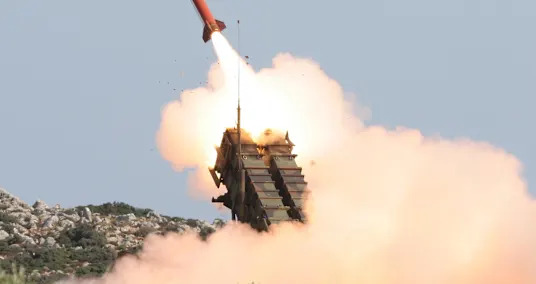
Jaakola said that one "very good example" of effective joint production is the interceptor missiles for the US MIM-104 Patriot air defense system. There is increasing co-production for them, including Germany's establishment of facilities to produce missiles there. But her comments suggest there is much more to be done.
A briefing presented last year to European Parliament members revealed that joint procurement across the union was far below targets, even though it said doing so would allow for better industrial leverage, better interoperability, and annual savings of several billion euros.
Jaakola also said that NATO militaries need to change how they develop weapons. She said Ukraine has shown how weapons can be developed and fielded far faster than in NATO systems.
She said it's an "important lesson that we need to learn from Ukraine" and that NATO needs to "actually see how we can change our own mindset and our own way of working when we talk about capability development."
Read the original article on Business Insider
LATEST POSTS
- 1
 $30K Disability Scam Implodes After Surf Trip in Mexico
 - 2Israel reports second missile fire from Yemen since start of Iran war
- 3The most effective method to Apply Antiquated Ways of thinking in Current Brain science Practices
- 4Medical team successfully delivers baby and removes massive tumor
- 53 Must-Change Settings for iPhone Clients: Safeguard Yourself !





- New Year's Eve Live: Nashville's Big Bash: How to watch the star-studded country music special live
- The Most Vital Crossroads in Olympic History
- New funding transforms lives by expanding electricity access across Africa
- Telescope in Chile captures stunning new picture of a cosmic butterfly
- Bonk.fun’s April Fools Joke Targets Israel, Sparks Debate
- Potential Houthi threat to Red Sea shipping could further damage global economy
- Corcept Therapeutics shares surge as lead drug gets FDA nod for ovarian cancer
- Roman around the Christmas tree | Space photo of the day for Dec. 25, 2025
- Transcript: NASA's Jared Isaacman on "Face the Nation with Margaret Brennan," April 5, 2026