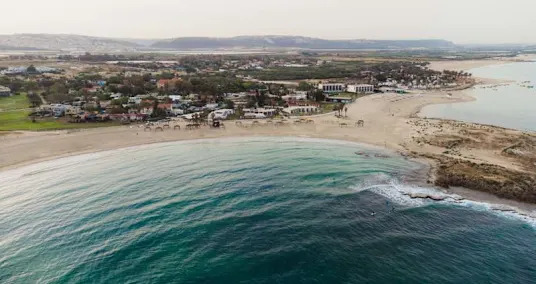
The discovery was made in an ancient shipwreck in the Dor Lagoon near the Carmel Coast, where archaeologists recovered nine pieces of unprocessed iron known as “blooms.”
Researchers from the University of Haifa said Wednesday that an underwater excavation off Israel’s northern Mediterranean coast uncovered what they described as the earliest known cargo of raw iron transported by ship, dating back around 2,600 years, Xinhua reported.
The discovery was made in an ancient shipwreck in the Dor Lagoon near the Carmel Coast, where archaeologists recovered nine pieces of unprocessed iron known as “blooms.” According to the university, the find provides direct evidence of how iron was transported in its earliest commercial stages.
The material was preserved in its original form, having solidified directly in a smelting furnace without undergoing forging or further refinement. Researchers said this distinguishes the cargo from later iron artifacts that typically show signs of shaping or tool-making.
Unlike copper and bronze, which could be melted into liquid form in ancient production processes, iron was heated with charcoal to produce a solid, porous mass. That mass was generally hammered to remove impurities and create denser material suitable for tools and implements.
The recovered blooms showed no indication of that secondary processing stage, suggesting they were transported immediately after production.

Earliest iron shipment discovered in ancient Mediterranean wreck
To determine the age and condition of the cargo, researchers conducted microscopic and chemical analyses.
Radiocarbon dating was also carried out on charred wood embedded in one of the pieces, helping confirm the timeline of the shipment. The findings were published in the journal Heritage Science.
Researchers said the cargo indicates that iron was being moved in raw form from production sites to other locations for further processing, pointing to a level of specialization in ancient manufacturing and trade networks in the Mediterranean.
The University of Haifa said the discovery provides new insight into early iron production and distribution practices in the region.
LATEST POSTS
- 1
 This Huge Ocean Beast Shifts Sharks’ Evolutionary Timeline
 - 2Holiday season sees uptick in norovirus cases, according to CDC
- 3Why this Tennessee special election has the 'whole world' watching
- 44 astronauts are en route home from ISS after medical issue forces early exit
- 5Why don’t humans have hair all over their bodies? A biologist explains our lack of fur


- The top astronomical discoveries of 2025
- Gulf aluminum output tumbles on Iran war
- Bennu asteroid samples provide clues about solar system origins and 'space gum'
- Benedict Cumberbatch takes on something even Sherlock can’t solve: male grief
- Osteoporosis, the silent disease, can shorten your life − here’s how to prevent fractures and keep bones healthy
- Defense Minister Katz finally condemns Jewish extremist violence against Palestinians
- The most effective method to Boost Eco-friendliness in Your Volvo XC40
- Europe: 4 Urban communities for a Paramount Social Experience
- Which One Energizes You the Most These Tech Developments